
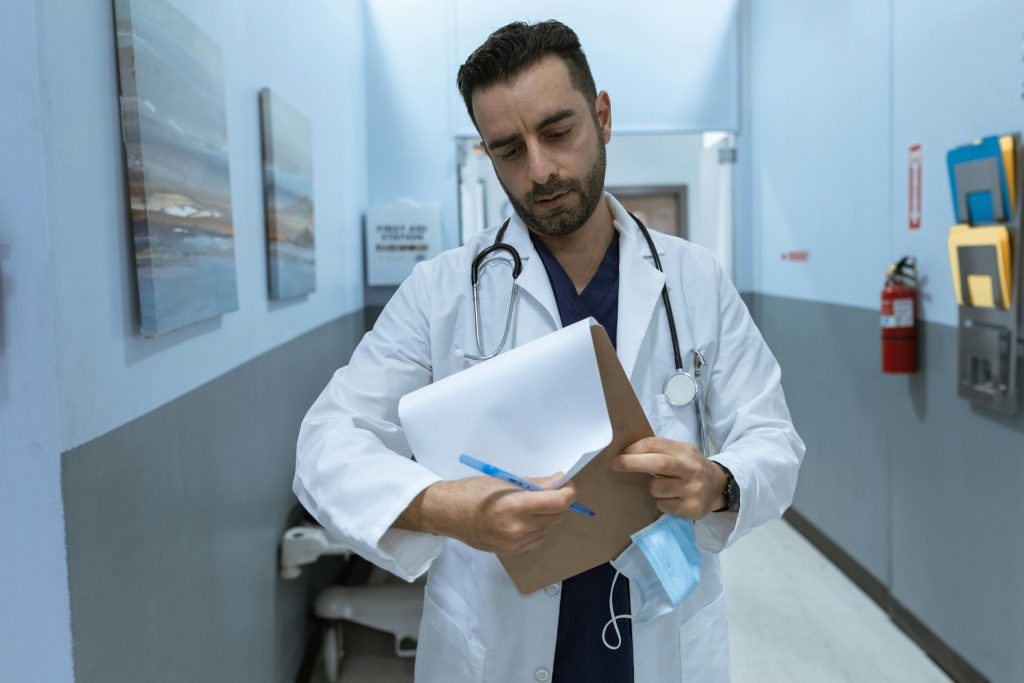
The United States healthcare system in 2026 is operating at a critical intersection of escalating geriatric demands and severe structural workforce shortages. As the population ages, the burden of managing patients in Skilled Nursing Facilities (SNFs) has shifted from a peripheral specialty to a core component of adult medicine. However, for the provider, SNF rounds are often defined by administrative chaos. Unlike a centralized hospital, an SNF often relies on disjointed paper records, fragmented Electronic Health Record (EHR) entries from multiple shifts, and a lack of real-time clinical synthesis. For the provider, this results in “time-bleed”—hours spent hunting for data rather than treating patients.
To survive this operational crisis, independent practices and medical groups are rapidly adopting a specialized solution: the virtual assistant for internists. This role has evolved far beyond basic administrative support. In the high-stakes environment of long-term care, a virtual assistant acts as a clinical architect, synthesizing vast amounts of shift data into actionable insights before the physician even steps onto the facility floor. By offloading the “data-mining” phase of SNF rounds to a remote clinical professional, internists can reclaim their focus, reduce burnout, and significantly improve the quality of geriatric care.
The Documentation Crisis in Skilled Nursing Facilities
Managing patients in a Skilled Nursing Facility is a logistical endurance sport. A typical internist may be responsible for dozens of patients across multiple facilities, each with a unique EHR system or, in some cases, legacy paper charts. The primary challenge is that clinical events happen 24/7, but the physician is often only on-site for specific rounding windows.
When an internist arrives at an SNF, they are often met with a “data dump.” They must sift through nursing notes from the last 72 hours, review physical therapy logs, check for new lab results, and verify if any medications were missed or changed during a shift transition. This manual abstraction process consumes nearly 40% of the rounding time. If a physician spends ten minutes hunting for a recent $O_2$ saturation trend, that is ten minutes taken away from the physical examination or the conversation with the patient’s family. This is why the integration of a virtual assistant for internists has become a strategic necessity for modern geriatric practitioners.
Defining the Role of a Specialized Virtual Assistant for Internists
In the regulated environment of US healthcare, a generalist virtual assistant is obsolete. At Eternus Global, founded in 2009 (formerly Scriptus Medical Writing & Research Services), we recognize that SNF management requires “Clinical Intelligence.” Our model utilizes Fractional Clinical Pods composed of Registered Nurses (RNs), licensed pharmacists, and certified medical scribes.
A virtual assistant for internists operating within this framework is far more than a simple data-entry clerk. These clinically literate professionals possess a deep understanding of the cascading impacts of ICD-11 diagnostic coding and the nuances of geriatric pharmacology. By “plugging into” your facility’s EHR system through secure, encrypted channels, they seamlessly orchestrate digital workflows behind the scenes.
Acting as the “eyes and ears” that never sleep, they monitor each patient’s longitudinal record to prepare a perfected summary. This allows the internist to walk into the facility with a holistic, high-definition view of every patient on the roster before the first encounter even begins.
Systematic Vitals Monitoring and Red Flag Detection
The most immediate benefit of a virtual assistant for internists is the systematic monitoring of vitals and the proactive identification of “red flags.” In an SNF, a slow decline in a patient’s status is often buried in the shift-by-shift nursing logs. A patient may have had a slight increase in respiratory rate or a subtle drop in blood pressure over three days—changes that might be missed during a hurried physical round.
A virtual assistant for internists performs advanced pre-charting by reviewing the last 7 to 14 days of vitals data. They look for trends rather than isolated numbers. By identifying a persistent trend of hypotension or a series of dangerous blood glucose spikes, the assistant can flag these as high-priority items. When the internist opens their mobile EHR or printed summary, these red flags are highlighted at the top. This allows the provider to intervene earlier in the disease process, potentially preventing a costly and traumatic hospital readmission.
Advanced Pre-Charting and EHR Abstraction for Complex Geriatric Care
Geriatric patients in SNFs are among the most complex in the healthcare system, often presenting with multiple comorbidities and polypharmacy. When a patient is admitted to an SNF from a hospital, the “hospital course” narrative is frequently long and convoluted. A virtual assistant for internists handles the heavy lifting of EHR abstraction, creating a streamlined view of the care transition.
Before the physician begins their rounds, the virtual assistant systematically reviews the daily schedule. They extract critical clinical events, such as new specialist consultations, recent imaging reports, and changes in wound care protocols. For new admissions, they meticulousy summarize the primary diagnoses and surgical procedures so the physician has a complete holistic view immediately. This level of pre-visit preparation ensures that the internist is not just “reacting” to the facility’s needs but is “directing” the clinical course with precision. Utilizing a virtual assistant for internists transforms the EHR from a burden into a tool for superior diagnostic reasoning.
Pharmacist-Led Medication Reconciliation and Denial Defense
Medication errors and insurance denials are the two greatest risks to both patient safety and facility revenue. Specialized virtual assistant for internists pods—particularly those led by pharmacists—take ownership of the medication reconciliation process. During high-risk care transitions, these assistants cross-reference the SNF orders against the hospital discharge summary, flagging duplicate therapies, incorrect dosages, and missing chronic medications.
Furthermore, they act as a clinical denial defense unit. In 2026, securing prior authorizations for brand-name medications and procedures has become a grueling administrative task. A clinically trained virtual assistant for internists navigates payer portals and drafts robust medical appeals citing specific clinical guidelines. By ensuring that authorizations are secured and clean claim rates remain over 98%, the virtual assistant protects the financial health of the practice while ensuring the patient receives the necessary therapy without delay.
Ironclad Security: Zero-Possession VDI for the Virtual Assistant for Internists
For many healthcare executives, the primary hesitation regarding offshore clinical assistance is data security and compliance with HIPAA. Trust is the absolute currency of the medical market; a single data breach can result in catastrophic financial penalties. At Eternus Global, we have engineered security into the bedrock of our operations.
A virtual assistant for internists from our team accesses your EHR exclusively via a highly secure, encrypted Virtual Desktop Infrastructure (VDI). This is a “Zero-Possession Architecture.” No Protected Health Information (PHI) ever leaves your US-based servers. The VDI acts simply as a “glass window” into your system. System-level restrictions are hard-coded to disable all capabilities for downloading, copying, pasting, or taking screenshots. This ensures absolute compliance with federal HIPAA regulations and is fully “TX SB 1188 aware.” Texas Senate Bill 1188 prohibits the offshore storage of electronic health records; our architecture ensures that your data remains on your servers, while we provide the clinical expertise to manage it.
The Malasakit Edge in Geriatric Care
In healthcare, administrative interactions frequently involve distressed, confused, or anxious patients and their families. This is especially true in SNF settings, where families are often navigating the difficult transition of an aging relative. An abrasive or purely transactional interaction can damage patient trust and lower satisfaction scores.
Elite virtual assistant for internists pods, particularly those based in our Philippine hub, anchor their service in the cultural trait of “Malasakit.” This is a Filipino term for a profound, intrinsic sense of empathy and caring as if the work were for one’s own family. Whether a virtual assistant is conducting a telehealth onboarding call or coordinating with an SNF nurse to clarify a medication order, this cultural empathy translates into an exceptional bedside manner. It drastically improves Patient Experience (PX) metrics and fosters a deep, lasting loyalty to your practice.
Achieving ROI and OpEx Reduction in SNF Management
Hiring in-house administrative staff to manage SNF documentation is increasingly cost-prohibitive. In 2026, the “fully loaded” cost of a local hire—including benefits, payroll taxes, physical office space, and the continuous costs of recruiting—is a major drain on margins. By contrast, a virtual assistant for internists allows clinics to deploy “Fractional Clinical Pods.”
Instead of hiring multiple full-time employees, clinics can purchase a block of hours utilized by a cross-functional remote team. This model routinely results in a 40% to 70% reduction in operating expenses (OpEx). The return on investment is immediate: the physician saves time, the clean claim rate increases, and the overhead is slashed. Most of our clients report that the savings in “pajama time” alone—the hours spent charting at home—are worth the investment. By offloading documentation to a virtual assistant for internists, physicians can leave the facility with their charts closed and their evenings restored.
Global Follow-the-Sun Coverage for SNF Rounds
One of the unique advantages of working with Eternus Global is our “Follow-the-Sun” delivery model. With hubs in the United States, UK, Spain, Bulgaria, Australia, and the Philippines, your virtual assistant for internists can operate while you sleep.
If you round at an SNF at 7:00 AM, your virtual assistant can be reviewing the night shift’s logs and lab results at 3:00 AM. By the time you wake up, your pre-charting is complete and your digital “rounding sheet” is perfected. We serve patients and facilities in multiple languages, including English, Spanish, Bulgarian, German, and French, allowing you to manage diverse patient populations with ease. This 24/7 clinical intelligence is the only way to stay ahead of the high-velocity demands of a modern Skilled Nursing Facility.
Scaling Your SNF Presence with a Virtual Assistant for Internists
Scaling an internal medicine practice in 2026 requires more than just clinical skill; it requires a departing from traditional, fragmented in-house models. As the physician shortage intensifies, you need a strategic partner that can handle the administrative friction of your rounds. A specialized virtual assistant for internists is no longer a luxury; it is the essential infrastructure required to build a sustainable, profitable, and patient-centric geriatric practice.
The transition to a Clinical Intelligence Hub is a seamless 30-day process. We begin by mapping your workflow to find where your time is bleeding. Then, our pod plugs into your EHR through our secure VDI. Finally, you review the perfected, finished work. By delegating the crushing weight of administrative tasks to a virtual assistant for internists, you empower yourself to do what you do best: practice medicine.
Stop fighting your inbox and start managing care. Contact Eternus Global today to schedule a free workflow audit, and discover how our AI-augmented, physician-led clinical pods can transform your practice in less than 30 days.