
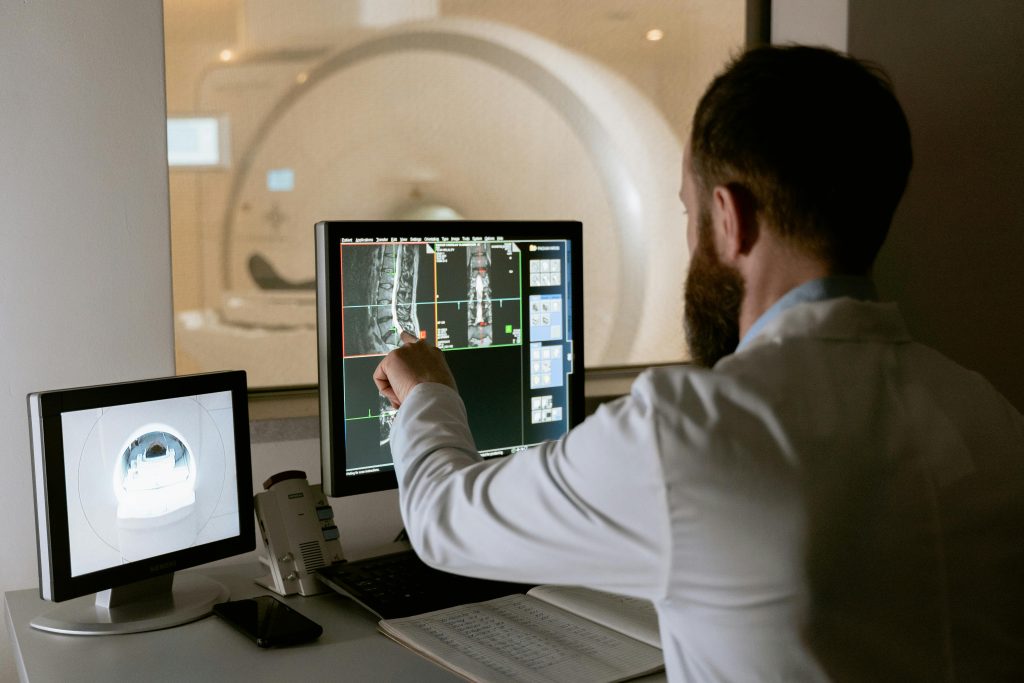
Internal medicine is often described as the “detective work” of the healthcare world. Internists manage complex, multi-system chronic diseases, frequently balancing patients with long-standing comorbidities like Type 2 diabetes, chronic kidney disease, and congestive heart failure. However, the sheer volume of data generated by modern healthcare—ranging from continuous glucose monitors to frequent lab panels—has created a cognitive load that is no longer manageable by a single human being. In this high-stakes environment, a virtual assistant for internists has become an essential clinical partner, specifically in the high-impact domain of “Red Flag Auditing.”
The United States healthcare system is currently facing a crisis of documentation and data overload. While the Electronic Health Record (EHR) was designed to organize patient data, it has inadvertently buried critical “red flags” under mountains of administrative noise. A physician might miss a subtle, upward trend in a patient’s creatinine levels or a slight, persistent drop in oxygen saturation simply because they are navigating a hundred different digital alerts. This is where a virtual assistant for internists steps in, acting as a clinical air traffic controller who monitors the horizon for impending medical emergencies.
Why a Virtual Assistant for Internists is Essential for Preventative Care
In 2026, the demand for preventative, data-driven medicine has reached an all-time high. Primary care and internal medicine practices are being judged not just on the volume of patients seen, but on their ability to prevent hospital readmissions. A virtual assistant for internists provides the infrastructure required to shift from a “reactive” model of care to a “proactive” one. Instead of waiting for a patient to call with a crisis, the assistant identifies the crisis while it is still a subtle shift in vital signs.
Traditional medical staffing models are often too overwhelmed with the physical front desk to perform deep-dive chart audits. An in-house receptionist is checking in patients, answering phones, and managing physical paperwork. They do not have the time—or often the clinical training—to look at a patient’s last three blood pressure readings and notice a dangerous trend. By contrast, a dedicated clinical assistant is specifically tasked with “Red Flag Auditing,” ensuring that no critical data point falls through the digital cracks of the EHR.
The Mechanics of Red Flag Auditing
Red flag auditing is a systematic process where a clinically trained remote professional reviews patient charts, labs, and remote monitoring data to identify specific clinical markers that require immediate physician attention. When you integrate a remote healthcare specialist into your workflow, they follow a rigorous protocol designed to catch clinical escalations before they result in an emergency room visit.
1. Vital Sign Trend Analysis
One of the most powerful benefits of a virtual assistant for internists is their ability to perform longitudinal trend analysis. A single blood pressure reading of 145/90 might not trigger an alarm in a busy clinic. However, if a virtual assistant notices that the patient’s baseline has shifted from 120/80 to 145/90 over the course of three weeks, they can flag this as a red flag. They monitor for persistent hypotension, blood glucose spikes, or sudden weight gain in heart failure patients—all of which are precursors to significant clinical events.
2. Lab Result Reconciliation
Internists deal with a constant stream of laboratory data. A clinical auditor audits incoming results to ensure that critical values are not just “filed,” but acted upon. For example, if a patient’s potassium level is creeping toward hyperkalemia or their hemoglobin A1c shows a sudden lack of glycemic control, the assistant alerts the physician immediately. They also ensure that “stable” labs aren’t ignored, closing the loop on routine screenings so the physician only has to focus on the results that require a change in the care plan.
3. Medication Adherence and Polypharmacy Checks
Internal medicine patients are often on a dozen or more medications. A virtual assistant for internists performs regular audits for potential drug-drug interactions or duplicate therapies, especially after a patient has been discharged from a hospital or a specialist’s care. They identify red flags like a patient being prescribed two different beta-blockers by different providers, a common error that can lead to life-threatening bradycardia.
Why Every Clinic Needs a Virtual Assistant for Internists to Prevent Burnout
Physician burnout is driven primarily by the “administrative friction” of modern practice. The American Medical Association reports that for every hour a doctor spends with a patient, they spend two hours on EHR tasks. A specialized remote professional eliminates a significant portion of this burden by handling the heavy lifting of data organization. When the internist opens a patient’s chart, they aren’t looking at a chaotic mess of notes; they are looking at a “Clinical Summary” prepared by their assistant that highlights the most critical red flags.
This strategic delegation allows the physician to reclaim their “pajama time.” Instead of spending their evenings auditing charts for missed lab values, the internist can leave the office at 5:00 PM knowing that their virtual assistant for internists has already triaged the day’s data. This not only improves the doctor’s quality of life but also enhances the safety of the entire patient population.
The Role of a Virtual Assistant for Internists in Sepsis and CHF Prevention
Two of the most dangerous conditions managed by internists are sepsis and Congestive Heart Failure (CHF). Both conditions have subtle “early warning” signs that are frequently missed in a high-volume clinical setting. A virtual assistant for internists is trained to look for these specific indicators during their daily audits.
- Sepsis Monitoring: The assistant monitors for the “SIRS” (Systemic Inflammatory Response Syndrome) criteria, such as a subtle increase in heart rate combined with a slight decrease in blood pressure or an unexplained change in mental status reported by family members.
- CHF Auditing: For patients with heart failure, a remote auditor tracks daily weights and peripheral edema reports. A weight gain of two pounds in twenty-four hours is a major red flag that requires an immediate adjustment in diuretic therapy to prevent a hospital admission.
By having a dedicated professional monitoring these metrics, the practice can intervene early with a simple phone call or a medication adjustment, saving the patient a traumatic and expensive hospital stay.
A Clinical Intelligence Hub: The Eternus Global Model
At Eternus Global, founded in 2009 (formerly Scriptus Medical Writing), we do not provide generalists. We provide a Clinical Intelligence Hub. When you hire a virtual assistant for internists through our agency, you are hiring a professional who is often a Registered Nurse (RN), a pharmacist, or a licensed physician assistant. Our team members understand the pathophysiology behind the red flags they are auditing.
Our model is built on “Fractional Clinical Pods.” This means your practice isn’t just getting one person; you are getting the collective expertise of a cross-functional team. If a clinical pod member notices a complex medication interaction during a red flag audit, they can consult with the pharmacist in their pod to provide the internist with a refined, clinically accurate recommendation for a medication change. This level of sophistication is what sets a premium clinical BPO apart from a generic virtual assistant service.
How a Virtual Assistant for Internists Secures Patient Data
Security is the primary concern for any medical director considering remote support. At Eternus Global, we address this through our Zero-Possession Architecture. We understand that trust is the currency of healthcare. A virtual assistant for internists must be able to work inside your EHR without creating a security vulnerability.
- Zero-Possession VDI: Our team accesses your system via a hardened Virtual Desktop Infrastructure (VDI). This acts as a “glass window” into your environment.
- No PHI Storage: Absolutely no Protected Health Information (PHI) ever leaves your US-based servers. Our systems are hard-coded to prevent downloading, printing, or copying data.
- Compliance Rigor: We are fully compliant with HIPAA, GDPR, and SOC 2 Type II standards. We are also deeply aware of regional mandates like Texas Senate Bill 1188, which prohibits the offshore storage of electronic health records. Every action taken by your remote staff member is logged, auditable, and transparent.
The “Malasakit” Advantage in Internal Medicine
In internal medicine, many patients are elderly or dealing with frightening chronic diagnoses. They need more than just technical accuracy; they need empathy. This is where the cultural value of Malasakit becomes a clinical tool. This term describes a deep, intrinsic sense of caring as if the patient were a member of one’s own family.
When a virtual assistant for internists identifies a red flag—such as a patient’s blood pressure being dangerously high—the way they communicate that to the patient matters. Because our team is not overwhelmed by physical office distractions, they can take the time to speak calmly with the patient, explain the next steps clearly, and ensure the patient feels cared for rather than processed. This “bedside manner” in a virtual environment significantly improves Patient Experience (PX) scores and fosters long-term loyalty to your practice.
Integrating a Virtual Assistant for Internists into Your Workflow
The transition to a remote clinical pod is designed to be low-friction. We don’t expect you to change your practice to fit us; we adapt to your specific clinical protocols. The integration of a virtual assistant for internists follows a simple three-step process:
- Workflow Mapping: A clinical architect shadows your team to identify where data is being missed and where your “time-bleed” is occurring.
- Clinical Pod Embedding: Your dedicated clinical specialist and their supporting pod members are trained on your specific EHR (Epic, Cerner, athenahealth, etc.) and your preferred reporting style.
- Red Flag Launch: The audit process begins. Within thirty days, your inbox is triaged, your charts are pre-audited, and your physicians are only seeing the alerts that truly matter.
This model allows for “Fractional Scalability.” You can start with a small block of hours for your most complex geriatric patients and scale up as the virtual assistant for internists demonstrates measurable improvements in clinic efficiency and patient outcomes.
Reclaiming the Practice of Medicine
The goal of every internist is to provide high-quality, compassionate care. But in the current system, that goal is often buried under a mountain of data entry and administrative noise. By utilizing a virtual assistant for internists, you are building a defensive shield around your time and your patients’ safety.
You are no longer alone in the fight against clinical “red flags.” You have a dedicated, clinically trained partner who is watching the numbers, auditing the charts, and ensuring that you have the information you need to make life-saving decisions. The remote support system is not just an administrative luxury; it is the essential infrastructure of a modern, sustainable medical practice.
Stop fighting your inbox and start managing care. Contact Eternus Global today to schedule a free workflow audit and discover how our AI-augmented, physician-led clinical pods can transform your practice in less than 30 days.