
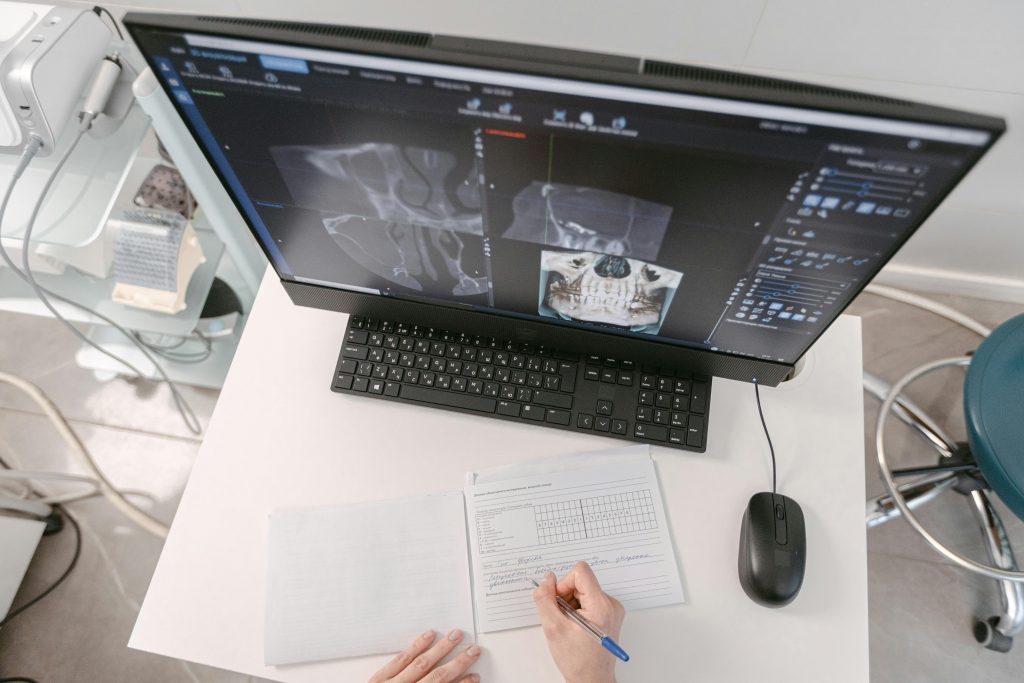
The healthcare industry in 2026 is no longer suffering from a lack of technology; it is suffering from an abundance of it. We have entered the era of the “Fragmented Clinic,” where ambient scribes, predictive diagnostic tools, remote patient monitoring sensors, and complex billing software surround physicians. While each of these tools promises to increase efficiency, they often create a secondary layer of administrative labor: the labor of orchestration. This is where the emergence of the virtual assistant in ai has transformed clinical operations from a series of disjointed tasks into a synchronized symphony of care.
For the modern physician, the promise of artificial intelligence often feels like another “inbox” to manage. An ambient scribe drafts a note, but it requires auditing. A predictive algorithm flags a potential sepsis risk, but it requires validation. A remote monitor sends a blood glucose alert, but it requires a follow-up call. Without a central intelligence hub to manage these outputs, the technology becomes a burden rather than a benefit. By utilizing a virtual assistant in ai, independent practices and large health systems alike are finally able to achieve the “100% focus” on patient care that they were promised decades ago.
Defining the Virtual Assistant in AI for Modern Practices
Historically, remote assistants were viewed as generalist workers performing basic data entry. In the current landscape, that definition is obsolete. A virtual assistant in ai is a clinically literate professional—often a Registered Nurse (RN), a pharmacist, or a certified medical coder—who operates at the intersection of clinical medicine and agentic software. They do not just “type”; they orchestrate. They act as the human-in-the-loop that ensures the digital tools are operating within the guardrails of clinical safety and billing compliance.
At Eternus Global, founded in 2009 (formerly Scriptus Medical Writing), we have pioneered this orchestration model. We recognized that the gap between IT and healthcare is not a technical problem, but an operational one. Our hubs in the United States, Spain, Bulgaria, and the Philippines provide the “follow-the-sun” coverage necessary to manage these tools twenty-four hours a day. When you integrate this specialized role into your clinic, you are not just hiring a person; you are deploying a Clinical Intelligence Hub that manages your entire digital stack.
How a Virtual Assistant in AI Orchestrates Ambient Scribes
The most significant advancement in clinical documentation has been the ambient scribe. These tools listen to patient encounters and draft SOAP notes in real-time. However, even the most advanced software is prone to “hallucinations” or missing subtle contextual nuances. A virtual assistant in ai is indispensable in this hybrid workflow. They don’t just wait for the note to be finished; they proactively audit the output against the patient’s historical records and the actual conversation.
The remote professional ensures that the medications mentioned during the visit are accurately reflected in the plan and that the ICD-11 coding matches the complexity of the medical decision-making. They ensure the formatting complies with your specific clinic standards and queue the perfected note for the physician’s final signature. This eliminates the “pajama time” spent correcting drafts at midnight. By having a specialized orchestrator manage the scribe, the physician can walk out of the exam room with a closed chart every single time.
The Clinical Pod: Managing the Digital Front Door
Managing high patient volumes requires more than just a receptionist; it requires clinical triage. In our orchestration model, your remote team operates in cross-functional “Clinical Pods.” These pods manage the “Digital Front Door” of your practice—the patient portal, the RPM alerts, and the telehealth waiting rooms. When a patient sends a message through the portal, it is intercepted by a clinically trained professional.
They evaluate the inquiry using established clinical protocols. Administrative questions about billing or pharmacy receipts are resolved independently, while “red flag” clinical escalations are routed directly to the physician with a summarized context. This orchestration ensures that the physician’s inbox is a stream of high-priority clinical decisions rather than a cluttered mess of administrative noise. For telehealth, the pod acts as virtual roomers, troubleshooting patient technology and collecting vitals before the doctor ever logs on.
Why Your CISO Prefers a Virtual Assistant in AI over Generic Support
A Chief Information Security Officer (CISO) looks for “auditable accountability.” A generalist agency often provides decentralized workers using personal computers, which is a nightmare for compliance. In contrast, hiring a virtual assistant in ai from a managed BPO like Eternus Global provides a centralized, manageable security profile. Our VDI generates a single, unified audit trail of every action taken within your environment.
Furthermore, because every professional in our pods is a clinically trained expert, they understand the “why” behind security protocols. They aren’t just following a checklist; they are healthcare professionals who have been trained in medical ethics and patient confidentiality. This clinical intelligence provides an additional layer of “Human Firewall” protection that a generic remote worker simply cannot provide. Your CISO will sleep better knowing that the people orchestrating your tools are as committed to data integrity as your in-house staff.
The Security Layer: Zero-Possession VDI and Compliance
For any healthcare executive or CISO, the primary concern with remote orchestration is data sovereignty. How do you ensure that Protected Health Information (PHI) stays secure when a virtual assistant in ai is accessing your system from a global hub? Eternus Global solves this through our “Zero-Possession Architecture.” This is a hardened, zero-trust framework engineered to pass the most rigorous security audits.
In this model, the remote team accesses your Electronic Health Record (EHR) via a secure, encrypted Virtual Desktop Infrastructure (VDI). This acts simply as a glass window. The assistant can interact with the data, but absolutely no PHI ever leaves your US-based servers. We have hard-coded restrictions that disable all capabilities for downloading, copying, pasting, or taking screenshots. This ensures absolute compliance with HIPAA, GDPR, and state-level mandates like Texas Senate Bill 1188. By utilizing this architecture, you get the benefits of global clinical expertise without the traditional risks associated with offshoring.
The Malasakit Fabric: Humanizing the Orchestration
While we talk extensively about technology and AI, healthcare is ultimately a human endeavor. This is where our cultural philosophy of Malasakit becomes a vital component of the Clinical Intelligence Hub. Malasakit is a Filipino term that describes a profound, intrinsic sense of empathy and deep care. When a virtual assistant in ai manages your patient follow-ups or coordinates with specialists, they do so with a level of compassion that transcends the digital medium.
Whether it’s a post-discharge wellness call or helping a frustrated family member navigate an insurance denial, the remote professional provides a “digital bedside manner” that fosters deep patient loyalty. They treat your reputation and your patients as if they were their own. This human-centric approach to orchestration ensures that as your clinic becomes more high-tech, it also becomes more high-touch. The goal is not to replace human interaction, but to remove the friction that prevents human interaction from happening.
The ROI of a Virtual Assistant in AI Clinical Pod
The financial argument for this model is quantifiable and immediate. Hiring in-house staff for tech orchestration involves exorbitant overhead, including payroll taxes, benefits, physical office space, and the continuous costs of recruiting and training in a high-turnover market. Most practices that deploy a virtual assistant in ai report a 40% to 70% reduction in operating expenses.
By utilizing a fractional model, you only pay for the clinical intelligence you use. Instead of hiring three separate full-time employees for coding, scribe auditing, and patient triage, you utilize a cross-functional team that scales with your patient volume. This financial agility is essential for independent practices trying to remain profitable in a high-inflation environment. Because our teams are already trained in platforms like Epic, Cerner, and athenahealth, the time to deploy is often under 30 days, providing an immediate return on investment.
Reclaiming the Clinical Narrative through Coordination
Internal medicine and specialty practices are often buried under the weight of specialist coordination. When an internist refers a patient to a cardiologist, the loop often remains open. A virtual assistant in ai ensures that every referral is tracked, every consult note is retrieved, and every lab result is correctly mapped back to the EHR. They act as the “Clinical Quarterback,” managing the flow of information across the care continuum.
This orchestration extends to Revenue Cycle Management (RCM) and Prior Authorizations. A pharmacist-led pod can navigate payer portals with surgical precision, drafting appeals for medical necessity that are grounded in clinical evidence. This reduces denials and ensures that the practice is compensated for the complex care it provides. By delegating these administrative burdens to a specialized orchestrator, the physician is finally freed from the “administrative treadmill.”
Clinical Research and Medical Writing Excellence
Beyond daily clinic operations, the Clinical Intelligence Hub supports the academic and research goals of your practice. Founded as a medical writing firm, Eternus Global has a 16-year history of delivering peer-reviewed rigor. A virtual assistant in ai can assist in protocol design support, site coordination, and regulatory submissions.
Our team has delivered over 1,200 manuscripts and supported 350+ protocols. We provide PhD-level biostatistical analysis and publication-ready figures. For clinics looking to grow their reputation through clinical trials or CME content, having an orchestrator who understands both the technology and the research methodology is a distinct competitive advantage. We bring CRO-grade discipline to every project, ensuring your research is audit-ready and scientifically sound.
Embracing the Virtual Assistant in AI for Future Growth
As we look toward the next decade of healthcare, the complexity of medical software will only increase. We are moving toward a future of “Agentic AI,” where software agents will perform tasks semi-autonomously. However, these agents will always require a human orchestrator to ensure they are serving the best interests of the patient and the physician. The virtual assistant in ai is the essential professional role of this new era.
At Eternus Global, we are committed to building the infrastructure for this future. Our sixteen-year legacy as a medical knowledge process outsourcing company provides us with the depth of experience required to manage the most complex clinical workflows. By choosing a partner from our global Clinical Intelligence Hub, you are future-proofing your practice against the rising tide of administrative complexity. You are choosing a model that values security, clinical literacy, and human empathy in equal measure.
The transition to a synchronized, high-performance clinic is closer than you think. By delegating the heavy lifting of tech orchestration to a virtual assistant in ai, you empower your physicians to do what they do best: practice medicine. Reclaim your focus, protect your data, and elevate your patient experience today.
Stop fighting your inbox and start managing care. Contact Eternus Global today to schedule a free workflow audit, and discover how our AI-augmented, physician-led clinical pods can transform your practice in less than 30 days.