
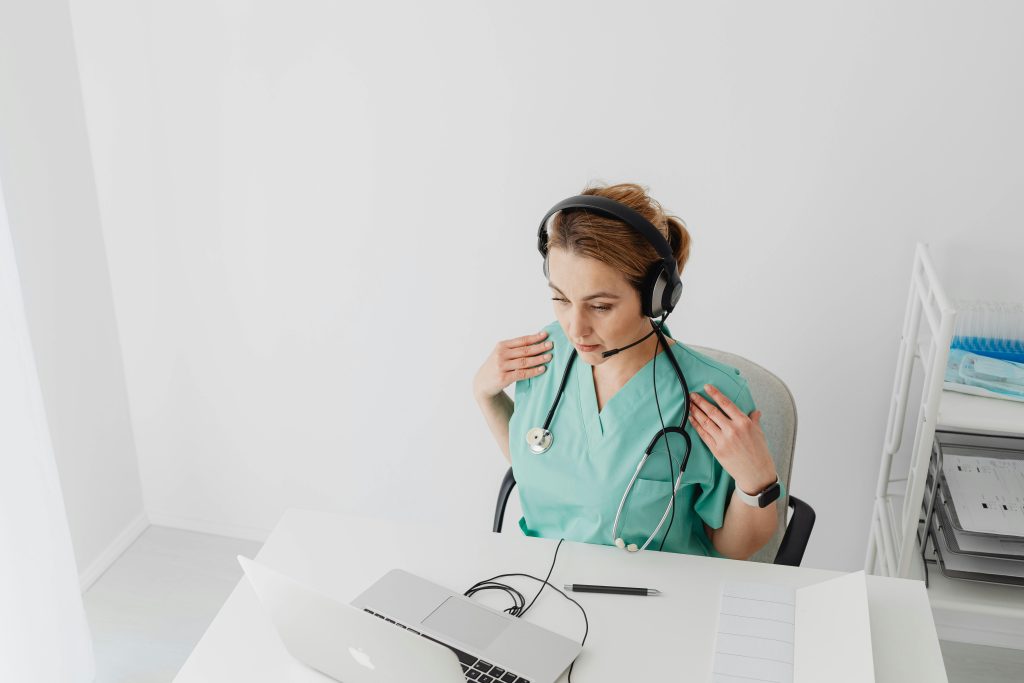
The United States healthcare system in 2026 is grappling with a structural labor crisis that threatens the very foundation of patient care. As the physician shortage is projected to reach over 85,000 providers by 2036, the practitioners who remain are finding themselves buried under an avalanche of administrative friction. Research indicates that for every hour of direct clinical care, a physician spends two hours on electronic health record (EHR) management and documentation. This “documentation debt” is the primary driver of clinical burnout. To survive, modern practices are no longer looking for generalist help; they are looking for a specialized virtual assistant persona that possesses deep clinical literacy.
The shift toward remote clinical support has evolved. In the past, remote workers were often generalists who handled basic scheduling or email management. However, in a high-stakes environment where precise charting and complex medication reconciliation are required, the generalist model has become obsolete. A medical practice requires a partner who understands the difference between a minor symptom and a clinical red flag. This is why the Registered Nurse (RN) background has become the gold standard for creating the ultimate virtual assistant persona for modern medical organizations.
Defining the High-Authority Virtual Assistant Persona
A virtual assistant persona is more than just a set of job responsibilities; it is the embodiment of the professional standards, medical knowledge, and cultural values that a remote worker brings to a practice. In the context of Eternus Global, founded in 2009, this persona is anchored in clinical expertise. When a practice integrates a remote team, they are not just “outsourcing tasks”; they are augmenting their clinical intelligence. By utilizing Registered Nurses to fill this virtual assistant persona, practices ensure that the individual managing their charts understands the physiological narrative of the patient. An RN brings years of academic training and bedside experience to the keyboard. They understand the cascading impacts of diagnostic coding, the importance of precise medical terminology, and the critical nature of time-sensitive data. This professional background ensures that the remote support is not just a data entry clerk, but a “Clinical Architect” capable of orchestrating complex digital workflows.
The modern healthcare landscape is too complex for “good enough” support. Every note entered into the EHR is a legal record and a billing trigger. When a nurse assumes the role of a remote partner, they bring a level of accountability that is ingrained in their licensure. This isn’t just about finishing a task; it’s about the integrity of the clinical record. This high-authority approach is what allows independent practices to scale their operations without compromising the quality that defines their reputation.
The Clinical Logic Behind a Virtual Assistant Persona with Nursing Experience
The primary reason why an RN background is essential for a high-performance virtual assistant persona is the ability to apply clinical judgment. Documentation is rarely a matter of simple transcription. It involves interpreting a physician’s dictated notes, ambient AI scribe outputs, and specialist consults to form a cohesive SOAP note. A generalist worker may misinterpret a term or miss the significance of a laboratory value, whereas a nurse-led virtual assistant persona provides a layer of peer-reviewed rigor. This clinical judgment is particularly vital in specialized domains such as geriatric care or internal medicine. When managing complex patients with multiple comorbidities, the support team must be able to navigate a cluttered EHR and extract the most relevant data.
An RN can identify a dangerous drug-drug interaction during medication reconciliation or spot a sudden drop in oxygen saturation in a hospital discharge summary. They understand the “why” behind the data they are entering. This proactive oversight, provided by a clinician in the virtual role, ensures that the physician is not just getting “more help,” but “smarter help.” By having a clinician in the virtual role, the practice gains a proactive safety net that reduces medical errors and improves patient outcomes. It transforms the administrative burden into a collaborative clinical process.
Accuracy in Charting: The Core Objective of the Virtual Assistant Persona
The cornerstone of a sustainable practice is the “Clean Claim.” In 2026, insurance payers utilize advanced AI-driven engines to find reasons to deny or down-code claims. To achieve 98% clean claim rates, the documentation must be flawless. This is where the virtual assistant persona of a Registered Nurse provides a distinct competitive advantage. They ensure that the medical decision-making (MDM) is documented with the specificity required by the latest ICD-11 guidelines. They understand that a missed detail in the “Plan” section can lead to a denial that costs the practice thousands of dollars in uncompensated labor.
Furthermore, as ambient AI scribes become a staple in the exam room, the role of the “Human-in-the-Loop” has become critical. A virtual assistant persona led by a nurse audits the AI-generated notes to prevent “hallucinations”—errors where the AI misinterprets the conversation or invents data points. The RN ensures that the final note is an accurate, billable, and audit-ready reflection of the patient encounter. This eliminates the dreaded “pajama time,” allowing the physician to leave the clinic at 5:00 PM with all charts signed and closed. The accuracy of the chart becomes a byproduct of the clinical expertise behind the screen, rather than a burden for the doctor to manage late into the night.
Clinical Triage and the Digital Front Door
High-volume practices are often overwhelmed by patient portal messages. These messages range from routine receipt requests to urgent clinical concerns. A generalist cannot safely triage these messages without constant physician supervision. However, an RN-led clinical pod acts as the intelligent digital front door. They evaluate every message through established clinical protocols, resolving administrative tasks independently and escalating clinical inquiries to the physician with a summarized context. This level of triage extends to telehealth “rooming.” Before the doctor logs on, the remote professional contacts the patient to troubleshoot technology, collect updated vital signs, and prepare the patient for the visit.
This ensures that the physician’s time is spent 100% on medical decision-making. By delegating these time-consuming interactions to a clinically trained remote team, the practice maintains a high-performance workflow even during seasonal surges in patient volume. The patient feels cared for by a professional who speaks their language, and the doctor is protected from the “noise” of non-essential inquiries. This triage model is a strategic necessity for any practice that wants to remain responsive in an era of instant-access expectations.
Security and the Zero-Possession Virtual Assistant Persona
For any Chief Information Security Officer (CISO), data sovereignty is the top priority. Trust is the absolute currency of the medical market. A high-authority virtual assistant persona must operate within a security framework that is as robust as the clinic’s own internal systems. Eternus Global achieves this through a “Zero-Possession Architecture.” This zero-trust model ensures that absolutely no Protected Health Information (PHI) ever leaves your US-based servers. In this model, the virtual assistant persona interacts with your EHR exclusively via a secure, encrypted Virtual Desktop Infrastructure (VDI).
This acts simply as a “glass window” into your system. System-level restrictions are hard-coded to disable all capabilities for downloading, copying, pasting, or taking screenshots. This ensures absolute compliance with HIPAA, GDPR, and state-level mandates like Texas Senate Bill 1188. By providing a secure, auditable environment, we ensure that the remote clinician is an asset to your security posture rather than a liability. The CISO can see a granular log of every action taken, ensuring that the remote workforce meets the same standard as an in-house team sitting in the physical office.
The Cultural Value of Malasakit
While technical proficiency is the baseline, healthcare is ultimately a human endeavor. In our global hubs, particularly in our headquarters in Iloilo, Philippines, we anchor our service in the cultural trait of “Malasakit.” This term describes a profound, intrinsic sense of empathy and deep care. This cultural philosophy is a core component of our clinical pods, ensuring that every patient interaction reflects the physician’s own standard of care. In a senior care or family medicine setting, administrative interactions often involve distressed family members. A purely transactional interaction can damage trust.
A remote clinician anchored in Malasakit brings warmth and compassion to the digital exchange. Whether coordinating a specialist referral or explaining an insurance denial, the professional treats the patient as if they were a member of their own family. This human-centric approach fosters deep patient loyalty and drastically improves Patient Experience (PX) metrics. It’s not just about getting the data right; it’s about making the patient feel heard and supported throughout their journey. This is the difference between a “caller” and a “caregiver” who happens to be working remotely.
Fractional Clinical Pods and Operational Scaling
Hiring in-house administrative staff involves exorbitant overhead, including payroll taxes, health benefits, and the continuous costs of recruiting and training in a high-turnover market. Partnering with a specialized clinical hub allows clinics to deploy Fractional Clinical Pods. This model allows a practice to access a cross-functional team—including RNs and pharmacists—on a flexible basis that matches their actual patient volume. Instead of hiring multiple full-time employees, a clinic can purchase a block of clinical intelligence.
This model routinely results in a 40% to 70% reduction in operating expenses while providing a higher level of clinical literacy than is typically available in the local labor pool. Because our teams are already trained on major EHR platforms like Epic, Cerner, and athenahealth, the time-to-deployment is typically under 30 days. This financial and operational agility is essential for independent practices trying to remain sustainable in 2026. It allows you to grow your practice without the financial risk of over-extending your in-house staff.
Reclaiming the Clinical Narrative through Orchestration
The modern internist or family doctor often feels like a data-entry clerk who happens to have a medical degree. The use of clinical pods provides the operational pressure valve that prevents this narrative from becoming a reality. By orchestrating the clinic’s software, managing the inbox, and handling the complex prior authorizations, the remote pod allows the physician to reclaim their focus. They go from fighting the system to leading it. This orchestration extends to Revenue Cycle Management (RCM) and Denial Defense.
A pharmacist-led pod within the hub can navigate payer portals with surgical precision, drafting appeals for medical necessity that are grounded in pharmacological evidence. By delegating these “administrative headaches” to a specialized team, the physician is finally freed to do what they do best: practice medicine. This shift in focus is not just a benefit for the doctor; it is a benefit for the entire patient population. A focused doctor is a safer doctor, a more present doctor, and a more effective healer.
The Future of Sustainability in Healthcare
As we move toward the next decade, the role of the human professional in medicine will only become more vital as a safeguard for emerging technologies. We are transitioning into an era of Agentic AI, where software performs tasks semi-autonomously. However, these tools will always require a human orchestrator to ensure they align with clinical safety and ethical standards. At Eternus Global, we are committed to building the infrastructure for this high-intelligence future. Our sixteen-year legacy as an AI-augmented Clinical Intelligence Hub provides us with the depth of experience required to manage the most complex clinical narratives.
By choosing a specialized support model, you are future-proofing your practice against the rising tide of administrative complexity. You are choosing a model that values clinical literacy, ironclad security, and human empathy in equal measure. The goal is to restore the joy of medicine. When a physician can walk out of the clinic knowing that their documentation is complete, their inbox is empty, and their patients are cared for with compassion, the system works. The virtual assistant persona is the essential professional role that makes this sustainability possible. By leveraging the clinical power of an RN-led virtual assistant persona, you are making a strategic investment in your organization’s longevity and your own well-being.
Stop fighting your inbox and start managing care. Contact Eternus Global today to schedule a free workflow audit, and discover how our AI-augmented, physician-led clinical pods can transform your practice in less than 30 days.