
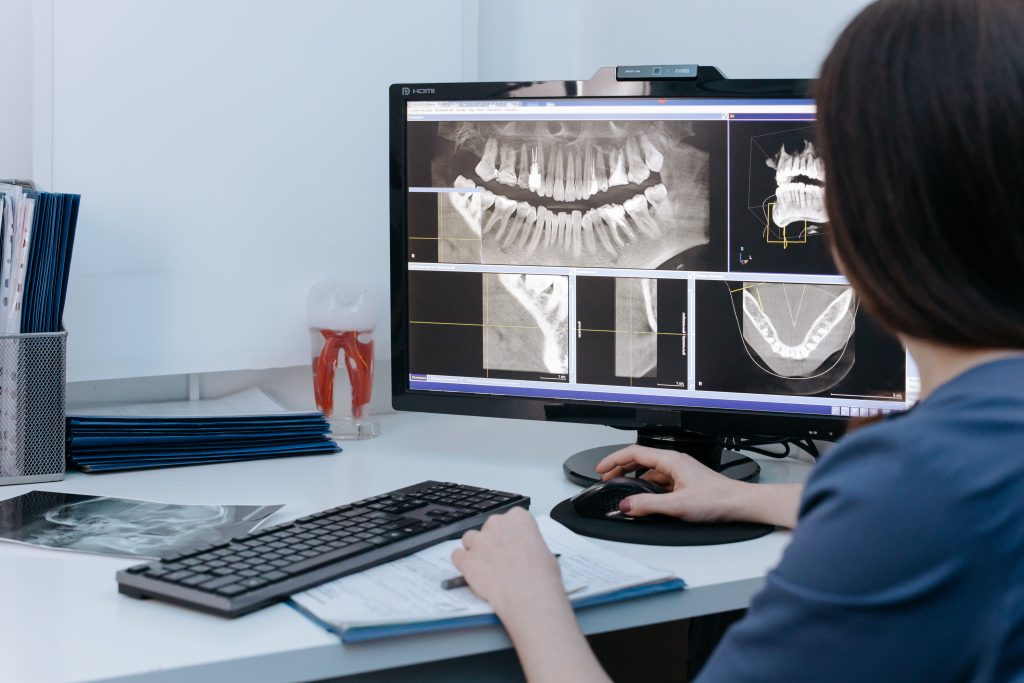
The clock strikes midnight, and across the United States, thousands of brilliant medical minds are illuminated not by the sterile lights of an operating room, but by the pale blue glare of a computer monitor. This is “pajama time”—the hours healthcare providers spend at home completing electronic health record (EHR) documentation long after the clinic doors have closed. It is an unpaid, exhausting second shift that has transformed highly trained clinical experts into overqualified data-entry clerks.
According to data from the American Medical Association, modern physicians spend nearly fifty percent of their workday consumed by screen time and keyboard interactions. For every hour of direct patient care, two more hours are swallowed by administrative friction. This structural operational crisis is the primary driver of systemic inefficiency and clinical burnout, pushing a staggering number of providers to consider leaving the field entirely. As the industry faces a projected shortage of over 85,000 physicians by the year 2036, the traditional model of clinic management is proving to be unsustainable. To break free from this administrative burden and protect their professional well-being, progressive medical practices are adopting a proven structural solution: integrating a dedicated healthcare virtual assistant into their daily infrastructure.
The Pajama Time Epidemic and the Role of a Healthcare Virtual Assistant
To eradicate pajama time, we must first understand why it exists. The modern EHR environment was built for compliance, billing, and data tracking, not for clinical speed or user experience. Every patient encounter triggers a cascade of documentation requirements: precise ICD-10 or ICD-11 diagnostic codes, detailed review of systems, comprehensive history of present illness, and meticulously structured SOAP notes. When a physician tries to complete this charting in real-time during an exam, the computer screen becomes a physical barrier between the doctor and the patient, damaging the therapeutic relationship.
Consequently, most providers defer their charting until the end of the day. By 5:00 PM, a physician may have accumulated twelve to fifteen incomplete patient charts, alongside a mountain of unaddressed inbox messages, prescription refill requests, and complex prior authorizations. The result is an inevitable backlog that must be resolved at the family dinner table or late into the night.
When a clinic deploys a specialized healthcare virtual assistant, this exhausting cycle is completely broken. A virtual assistant does not operate as a distant, generalist data clerk; rather, they serve as a secure extension of the internal clinical team. By embedding directly into your established EHR system—whether you utilize Epic, Cerner, athenahealth, eClinicalWorks, NextGen, or DrChrono—they manage the repetitive digital workflows that typically drain a physician’s time and energy.
How a Healthcare Virtual Assistant Restores the Five O’Clock Departure
The primary metric of success for an advanced remote support strategy is simple: ensuring all patient notes are closed, reviewed, and signed before the physician leaves the building at 5:00 PM. Achieving this standard requires a highly coordinated approach across multiple operational domains. Within this domain, the healthcare virtual assistant acts as an administrative filter, managing data workflows before, during, and after each patient encounter.
Advanced Pre-Charting and Data Abstraction
For internal medicine practices, specialty clinics, and skilled nursing facilities (SNFs), managing complex patients with multiple chronic comorbidities requires extensive preparation. A clinical virtual assistant initiates the day’s workflow long before the first clinic door opens. They systematically review the daily schedule and conduct comprehensive chart abstraction, extracting critical clinical events from the preceding seven to fourteen days.
If a patient had a recent emergency room visit or an external specialist consultation, the assistant retrieves those hospital course narratives, summaries, and lab results, pre-populating the current EHR encounter file. They highlight critical red-flag alerts—such as sudden drops in oxygen saturation, dangerous blood glucose spikes, persistent hypotension, or recent falls—ensuring the physician possesses a clear, holistic view of the patient’s immediate status before entering the examination room.
Real-Time Scribe Support and Inbox Triage
Another way a healthcare virtual assistant reclaims time is through automated inbox triage and real-time document preparation. Patient portals have created a continuous stream of communication that often overwhelms clinical staff. The virtual assistant filters hundreds of incoming daily messages, utilizing established clinical protocols to resolve minor administrative inquiries independently, such as billing questions or receipt requests. Clinical messages are accurately categorized and organized, allowing the provider to instantly identify urgent patient needs.
Furthermore, during patient encounters, a remote clinical scribe can manage real-time documentation. They capture the key elements of the conversation, format the required medical data, and queue the perfected SOAP note within the EHR. When the physician concludes the patient visit, they do not face an empty, daunting template; instead, they review a pre-formatted, accurate note that simply requires a final validation and digital signature.
The Ambient AI Gap: Why an AI Scribe Requires a Healthcare Virtual Assistant
The healthcare industry in 2026 is experiencing a rapid adoption of ambient artificial intelligence tools designed to listen to patient encounters and automatically draft clinical notes. While these AI tools represent an impressive technological leap, they are not infallible. AI scribes lack clinical intuition and are frequently prone to “hallucinations,” missed contextual nuances, or formatting errors that fail to comply with strict clinic standards. A physician cannot safely sign off on an unedited, raw AI-generated note without spending valuable time auditing every line for clinical accuracy.
This is where a clinical healthcare virtual assistant becomes indispensable in a hybrid, AI-augmented workflow. Operating as the vital human-in-the-loop, the virtual assistant reviews the AI-generated drafts in real-time. They verify that the listed pharmacological doses are correct, confirm that the documented physical exam findings match the physician’s actual maneuvers, and polish the structure to ensure it meets institutional compliance guidelines. This combination of advanced artificial intelligence and professional human oversight delivers the ultimate documentation solution: completely accurate, audit-ready charts delivered with maximum operational efficiency.
Hardened Data Security: Protecting PHI with a Healthcare Virtual Assistant
For healthcare executives and chief information security officers (CISOs), the primary hesitation regarding remote administrative services is data security and compliance with the Health Insurance Portability and Accountability Act (HIPAA). Trust is the absolute currency of the medical market, and a single data breach can result in severe financial penalties, devastating legal exposure, and a total loss of patient confidence.
When utilizing a remote healthcare virtual assistant, cybersecurity must be engineered directly into the bedrock of the operation. At Eternus Global, we address these concerns through a strict Zero-Possession Architecture. In this zero-trust model, absolutely no Protected Health Information (PHI) ever leaves your local, United States-based servers.
Our remote clinicians access your EHR environment exclusively via a secure, encrypted Virtual Desktop Infrastructure (VDI). This configuration acts simply as a secure glass window into your existing network. System-level security restrictions are hard-coded to completely disable all local capabilities for downloading, copying, pasting, printing, or locally caching data. Session keystrokes and file transfers are blocked by absolute policy, and every single interaction is logged directly to your security information systems and our independent SOC 2 Type II audit trail.
This model ensures complete compliance not only with federal HIPAA and European GDPR standards but also with aggressive state-level legislation, such as Texas Senate Bill 1188, which explicitly prohibits the unmanaged offshore storage of electronic health records. Your data remains completely within your secure environment, passing the most rigorous institutional security audits.
The Malasakit Core: Humanizing the Healthcare Virtual Assistant Experience
While technical proficiency and ironclad compliance are essential, healthcare is fundamentally an industry of human connection. When patients interact with a clinic, they are often anxious, distressed, or confused. An abrasive, rushed, or purely transactional interaction with overloaded front-desk staff can severely damage patient trust.
Our remote clinical teams, located within our primary delivery hubs in the Philippines, anchor their daily service in a core cultural trait known as Malasakit. This term describes a deep, intrinsic sense of empathy, compassion, and shared accountability—the drive to care for another’s welfare as if they were a member of one’s own family.
This means your healthcare virtual assistant isn’t just mechanically updating fields in a database; they bring genuine warmth and focus to every patient touchpoint. Whether they are coordinating a post-discharge telehealth call, checking in on an elderly resident’s remote blood pressure monitor, or patiently helping a family member understand a complex prior authorization delay, this cultural commitment translates into exceptional bedside manner. By taking the administrative stress off your on-site team, your physical office transforms into a calmer, more welcoming environment where patients receive undivided attention.
Fractional Clinical Pods: Choosing the Right Healthcare Virtual Assistant Model
The traditional virtual assistant industry is built on a fragile, one-to-one placement model. If you hire an isolated generalist from a traditional agency and that individual falls ill, takes time off, or suddenly resigns, your administrative workflow instantly halts. Your practice is then forced to repeat the grueling cycle of recruitment, onboarding, and training, losing both momentum and revenue.
Eternus Global replaces this fragmented approach with a robust, cross-functional network known as Fractional Clinical Pods. Instead of a standard, isolated healthcare virtual assistant, your practice is supported by an integrated team composed of Registered Nurses (RNs), licensed pharmacists, physician assistants, and certified medical writers.
This team-based architecture delivers substantial operational advantages:
- Inherent Redundancy: Because your practice is supported by a structured pod rather than an individual worker, there is zero service interruption. If a pod member is away, another pre-trained clinical professional steps in seamlessly, maintaining your exact workflow.
- Specialized Division of Labor: Tasks are routed based on precise professional training. An RN handles complex clinical triage, a pharmacist manages medication reconciliations and denial appeals, and an experienced scribe focuses on EHR chart completion.
- Operational Scalability: Rather than committing to the rigid expense of multiple full-time in-house hires, you can purchase a flexible block of hours utilized by a cross-functional remote team. This model routinely results in a forty to seventy percent reduction in operating expenses while driving clean claim rates to over ninety-eight percent through proactive, clinically accurate coding.
Driven by 16+ Years of Clinical Expertise
Eternus Global did not emerge overnight during the recent remote-work boom. We were founded in 2009 as Scriptus Medical Writing & Research Services, built entirely on a culture of peer-reviewed rigor, clinical research, and scientific accuracy. Over the past nearly two decades, our organization has scaled into a premier global Clinical Intelligence Hub. Our extensive experience includes the successful delivery of more than 1,200 medical manuscripts, support for over 350 complex clinical trial protocols, and the management of 40 international pharmacovigilance programs.
With operational infrastructure spanning five countries—including the United States, the United Kingdom, Spain, Bulgaria, and the Philippines—our follow-the-sun model delivers true twenty-four-hour coverage. Your patient charts can be meticulously updated and closed out overnight, your patient portals can be completely triaged by dawn, and your practice can seamlessly serve a diverse patient population with native-fluent support in English, Spanish, Bulgarian, German, and French.
By integrating an advanced healthcare virtual assistant pod into your practice, you are not simply outsourcing administrative tasks; you are fundamentally upgrading your operational infrastructure. You are choosing to protect your physicians from burnout, secure your revenue cycle, and return your clinic’s primary focus to where it truly belongs: the patient.
Stop fighting your inbox and start managing care. Contact Eternus Global today to schedule a free workflow audit, and discover how our AI-augmented, physician-led clinical pods can transform your practice in less than 30 days.