
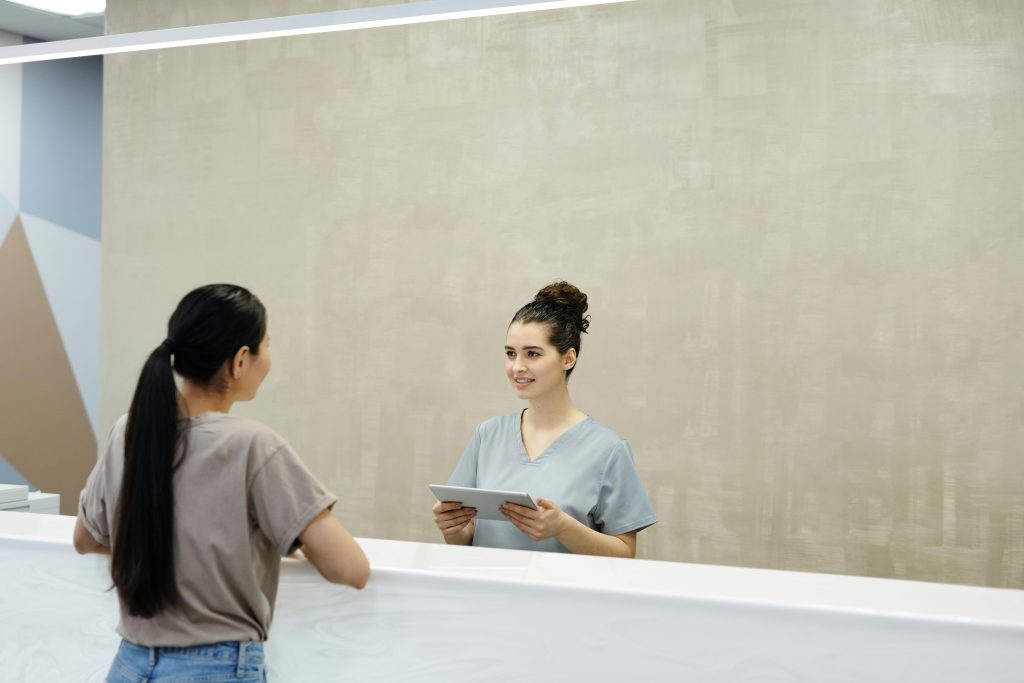
The traditional image of the medical front desk is one of controlled chaos. In a typical clinic in 2026, a receptionist is often seen juggling a ringing multi-line phone, checking in a physically present patient, and attempting to scan a stack of insurance cards, all while managing an ever-growing digital inbox. This fragmented approach to patient intake is no longer sustainable. With the United States facing a critical shortage of over 85,000 physicians by 2036, and internal staff turnover rates reaching record highs, practices are forced to modernize. The solution lies in a structural shift toward the digital front door, powered by a high-intelligence virtual assistant for medical offices.
Modernizing patient intake is not simply about replacing a person with a machine; it is about augmenting your practice with specialized clinical talent. The “digital front door” refers to the entire ecosystem of a patient’s interaction with your practice before they ever see the provider. This includes appointment scheduling, insurance verification, clinical triage, and pre-charting. By utilizing a virtual assistant for medical offices, a practice can ensure that these touchpoints are handled with clinical precision and empathetic care, rather than being squeezed into the narrow gaps of a busy receptionist’s day.
The Operational Crisis and the Virtual Assistant for Medical Offices
The primary driver of inefficiency in modern practices is administrative friction. Research from the American Medical Association indicates that physicians and their core staff spend nearly 50% of their day on screen time and keyboard interactions. This administrative burden is the leading cause of clinical burnout. When you integrate a virtual assistant for medical offices, you are essentially offloading the “paperwork” of the front desk to a specialized, off-site team.
Unlike a generalist administrative hire, a premium remote team from Eternus Global operates within a Clinical Intelligence Hub. We founded our organization in 2009 as Scriptus Medical Writing & Research Services, and that foundation of clinical rigor remains our core. Our assistants are not just data-entry clerks; they are often Registered Nurses, Pharmacists, and certified medical scribes. They possess the medical literacy required to understand complex diagnostic codes, pharmacological interactions, and the nuances of patient inquiries. This level of expertise ensures that your digital front door is managed by professionals who understand the high-stakes environment of healthcare.
Modernizing Patient Intake with a Virtual Assistant for Medical Offices
The patient intake process is the first impression a patient has of your care. If that process is slow, error-prone, or purely transactional, patient trust begins to erode before the exam even starts. A virtual assistant for medical offices transforms this workflow by managing the digital front door with a focus on speed and accuracy.
One of the most valuable roles of this assistant is “virtual rooming.” For both in-person and telehealth visits, the assistant contacts the patient ahead of time to troubleshoot technology, collect updated vital signs, and confirm the reason for the visit. This ensures that when the physician enters the virtual or physical room, they can begin the clinical encounter immediately. This systematic approach can increase a clinic’s daily patient capacity by 20% to 30% simply by eliminating the “administrative lag” that typically occurs at the start of every visit.
Solving Inbox Overload with a Virtual Assistant for Medical Offices
The adoption of patient portals has led to what many clinicians call “inbox paralysis.” The constant stream of messages—ranging from complex clinical questions to simple billing inquiries—can overwhelm a local front desk. A virtual assistant for medical offices acts as the intelligent filter for this communication.
By utilizing established clinical protocols, the assistant triages every incoming message. They can resolve minor administrative questions, such as receipt requests or office hour inquiries, without ever involving the physician. For clinical messages, the clinical pod can prepare a summary of the patient’s concern, check the most recent lab results, and present a clear brief to the provider. This ensures that the physician only spends time on tasks that require their high-level medical judgment, effectively clearing the “digital clutter” that contributes so heavily to the daily fatigue of a modern medical team.
The Economics of the Virtual Assistant for Medical Offices
When comparing the cost of a traditional in-house receptionist to a virtual assistant for medical offices, the financial benefits are staggering. Hiring a local employee involves significant “fully loaded” costs that go far beyond the hourly wage. These include payroll taxes, health insurance premiums, 401k matching, and paid time off. Furthermore, there is the operational overhead of physical office space, hardware, and furniture.
By contrast, choosing a fractional clinical pod through Eternus Global allows a practice to shift to a fractional clinical pod model. Instead of paying for a full-time employee who may have significant downtime, you pay for a block of high-efficiency clinical hours. Most of our clients report a 40% to 70% reduction in operating expenses (OpEx) within the first quarter. Because our team is already clinically trained and EHR-proficient, you also save the immense cost and time of recruitment and onboarding. The virtual assistant for medical offices provides a level of scalability that allows your practice to grow without the associated headaches of local staffing shortages.
Security and Compliance for the Virtual Assistant for Medical Offices
Data security is the most common concern for healthcare executives considering remote support. At Eternus Global, we have built our reputation on an ironclad security architecture. When you hire a virtual assistant for medical offices, you must ensure that your Protected Health Information (PHI) is handled with absolute care. We utilize a “Zero-Possession Architecture” to guarantee this.
Our team members access your Electronic Health Record (EHR) exclusively through a secure, encrypted Virtual Desktop Infrastructure (VDI). This acts like a glass window into your system. The remote clinician can see and interact with the data to perform their duties, but no PHI ever leaves your United States-based servers. We have hard-coded system-level restrictions that disable all capabilities for downloading, copying, pasting, or taking screenshots. This model ensures absolute compliance with HIPAA, GDPR, and SOC 2 Type II audits. Furthermore, our architecture is explicitly designed to meet aggressive state-level legislation, such as Texas Senate Bill 1188, which prohibits the offshore storage of electronic health records. With a virtual assistant for medical offices from Eternus, your data security is often stronger than it would be in a traditional office with physical charts and local hardware.
The “Malasakit” Advantage in the Virtual Assistant for Medical Offices
Technology should never come at the expense of empathy. In the healthcare industry, the “soft skills” of communication and compassion are what drive patient satisfaction and loyalty. This is why our virtual assistant for medical offices team is selected based on a core cultural value known as Malasakit.
Malasakit is a Filipino term that describes a deep, intrinsic sense of caring for a task or a person as if they were your own family. When a clinical team handles a patient call or manages a difficult prior authorization, they do so with a level of dedication that is rare in the BPO industry. They don’t just “process a ticket”; they manage a human life. This cultural empathy drastically improves Patient Experience (PX) metrics and ensures that your digital front door feels warm and welcoming. Patients feel supported because their virtual assistant for medical offices has the time and the training to listen, resolve issues, and provide clear communication.
Global Hubs and Follow-the-Sun Support for Your Practice
One of the greatest benefits of a virtual assistant for medical offices is the ability to provide coverage beyond the standard 9-to-5 workday. Eternus Global operates through multiple global hubs in the United States, United Kingdom, Spain, Bulgaria, and Australia. This “follow-the-sun” model means that your practice’s administrative tasks can continue around the clock.
While your physical clinic is closed, your clinical pod can be closing charts, reconciling medications, and triaging the overnight inbox. This ensures that when you arrive at the office the next morning, the administrative heavy lifting has already been done. Furthermore, we provide native-fluent support in English, Spanish, Bulgarian, German, and French. This allows your virtual assistant for medical offices to serve a multilingual patient population with ease, eliminating the need for expensive third-party translation services.
EHR Integration and Specialist Knowledge
A common mistake is thinking that any remote assistant can work in any clinic. The reality is that different specialties require different types of support. A virtual assistant for medical offices working in an internal medicine clinic faces different challenges than one working in a surgical center or a skilled nursing facility (SNF).
Our team at Eternus Global is trained across the major EHR platforms, including Epic, Cerner, athenahealth, eClinicalWorks, NextGen, and DrChrono. Whether it is performing complex pharmacist-led medication reconciliations or managing the denial defense for a high-volume orthopedic practice, the specialized remote assistant brings specialist knowledge to the table. We don’t just “use the tools”; we optimize them. By auditing AI-generated SOAP notes and ensuring every chart is audit-ready, the virtual assistant for medical offices becomes an essential part of the revenue cycle and quality-assurance process.
Transforming the Practice: The 3-Step Implementation
Switching to a model that incorporates a virtual assistant for medical offices is designed to be low-friction. We understand that physicians don’t have time for long, drawn-out transitions. Our process is broken down into three clear steps:
- Workflow Mapping: A clinical architect shadows your current front-desk team for five days to identify where time is being lost and where the assistant can have the most impact.
- Pod Integration: A dedicated clinical pod—led by RNs or pharmacists—plugs into your EHR via our secure Zero-Possession VDI. Your team begins managing the digital front door.
- Ongoing Optimization: You review the finished work, such as closed charts and approved prior authorizations. We refine the process based on your feedback, ensuring that the virtual assistant for medical offices operates exactly according to your clinic’s standards.
This entire process is typically completed in less than 30 days, allowing you to see an immediate reduction in administrative burden and a significant improvement in clinic morale.
A Sustainable Future for Your Medical Office
The healthcare landscape of 2026 demands a departure from outdated administrative models. You cannot solve a 21st-century staffing crisis with a 20th-century front-desk strategy. By embracing a virtual assistant for medical offices, you are future-proofing your practice. You are ensuring that your physicians are not burned out by paperwork, your data is more secure than ever before, and your patients receive the empathetic, efficient care they deserve.
Eternus Global is not just a vendor; we are a partner in your clinical success. Our history as Scriptus Medical Writing gives us a unique perspective on the intersection of research, medicine, and technology. When you choose a virtual assistant for medical offices from our team, you are getting a decade and a half of clinical expertise delivered through a secure, global intelligence hub.
The digital front door is the future of healthcare. It is time to reclaim your focus and give your physicians the time they need to practice medicine at the highest level. The administrative weight of your practice doesn’t have to be carried by you or your local staff alone. Let a specialized, clinically literate virtual assistant for medical offices handle the friction so you can focus on the healing.
Stop fighting your inbox and start managing care. Contact Eternus Global today to schedule a free workflow audit and discover how our AI-augmented, physician-led clinical pods can transform your practice in less than 30 days.