
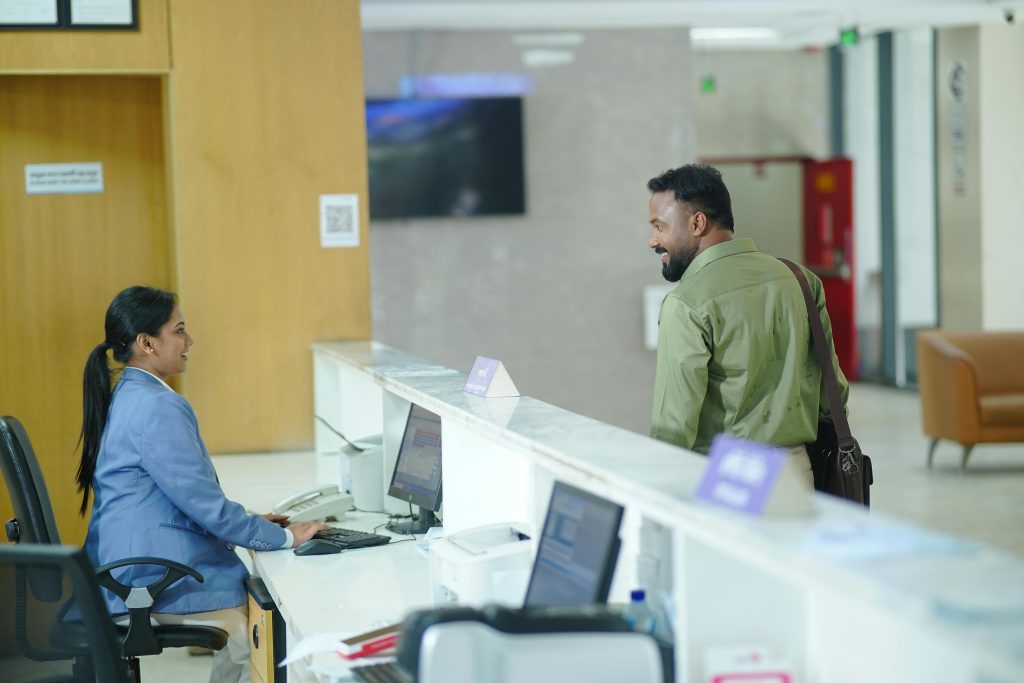
The reception area of a healthcare clinic is often a scene of operational friction. On any given morning, a single in-house medical receptionist is expected to greet arriving patients, collect physical intake clipboards, verify complex commercial insurance eligibility, answer a continuously ringing multi-line telephone system, and respond to urgent messages flooding the digital patient portal. This chaotic work environment creates an operational bottleneck. When front-desk staff balance multiple tasks, errors multiply, phone calls drop, and wait times increase. To survive these mounting administrative pressures, forward-thinking healthcare networks are executing a critical structural upgrade: front desk virtualization powered by a specialized virtual assistant for medical offices.
Transitioning away from a traditional lobby presence to an automated system allows a clinic to decouple friction from patient interactions. By assigning complex backend administrative duties to a dedicated virtual assistant for medical offices, local clinic staff can focus entirely on providing an attentive, personalized experience for the patients physically present in the building. This comprehensive guide outlines the operational strategies, financial returns, and clinical quality benefits realized when a practice modernizes its entry system through remote front desk virtualization.
The High Cost and Low Efficiency of Traditional Front Desk Operations
The financial reality of maintaining a fully staffed physical front desk has become a heavy burden for independent medical practices and skilled nursing facilities. When a practice manager reviews the annual budget for local administrative staff, the base hourly wage is only a small piece of the actual expense. A complete evaluation requires calculating the fully loaded employee cost, which includes mandatory payroll taxes, expensive health insurance premiums, retirement contributions, and paid time off. Furthermore, physical employees require dedicated clinic square footage, individual workstations, high-end computer hardware, ergonomic furniture, and active software user licenses.
Beyond these static overhead expenses, the healthcare industry is currently experiencing a severe recruitment and retention crisis. Local support staff frequently leave their positions due to burnout or higher-paying opportunities in non-medical sectors, creating a continuous cycle of expensive job advertisements, time-consuming interviews, and lengthy onboarding periods. During these frequent staffing vacancies, the administrative workload does not disappear; instead, it falls directly onto the shoulders of nursing staff and practicing physicians, accelerating clinical fatigue. By contrast, integrating a premium virtual assistant for medical offices removes these unpredictable human resource liabilities from your balance sheet. Practices that transition to a remote clinical pod model routinely see a forty to seventy percent reduction in administrative operating expenses within the first ninety days, while securing permanent workflow consistency.
Defining Front Desk Virtualization: The Digital Front Door
Front desk virtualization is not about replacing the human element of healthcare with impersonal automated answering systems or generic corporate voicemail menus. Instead, it is the strategic realignment of clinic workflows, where an off-site clinical intelligence hub manages all backend digital administrative pipelines. Under this modern framework, a specialized virtual assistant for medical offices handles the high-volume tasks that typically cause in-office chaos, allowing your remaining local staff to act as dedicated patient concierges.
When a patient interacts with a virtualized front desk, their journey is seamless and highly professional. Long before the patient arrives for their appointment, the remote virtual assistant for medical offices verifies their insurance benefits, collects digital intake documentation, and prepares the electronic health record file. When the patient walks into the clinic, they are not greeted by an distracted receptionist typing furiously behind a glass window. Instead, they interact with a relaxed staff member who can provide immediate, undivided personal attention, drastically improving the clinic’s initial impression and long-term reputation.
Core Operational Domains Handled by a Specialized Pod
The true value of a premium virtual assistant for medical offices lies in their ability to manage complex, high-volume tasks that require deep clinical literacy. At Eternus Global, founded in 2009 as Scriptus Medical Writing and Research Services, we do not provide generalist data-entry clerks. Instead, we deploy specialized, cross-functional fractional clinical pods staffed by highly educated healthcare professionals, including registered nurses, pharmacists, and certified medical scribes. These advanced remote teams manage four primary front-desk domains with absolute precision.
1. Inbound Call Management and Intelligent Clinical Triage
A continuously ringing phone is the number one driver of workplace stress at a traditional medical front desk. When you route your primary telephone lines to a dedicated virtual assistant for medical offices, every single call is answered promptly by a professional voice. Because our team members possess inherent clinical literacy, they do not just take vague messages. They utilize established clinical protocols to actively triage patient calls in real-time. A nurse-led pod can instantly differentiate between an administrative inquiry and a critical clinical escalation that requires an immediate telehealth visit or physical intervention, routing the data accurately and ensuring patient safety.
2. Insurance Verification and Prior Authorization Processing
Insurance eligibility errors and delayed prior authorizations are major causes of uncompensated care and lost practice revenue. A remote virtual assistant for medical offices takes complete ownership of this complex administrative pipeline. The pod proactively scans the upcoming schedule seven to fourteen days in advance, navigating complex commercial payer portals to verify coverage limits, copay requirements, and deductibles. When a specific diagnostic test or brand-name medication requires prior authorization, the virtual assistant compiles the necessary clinical data, laboratory metrics, and provider justifications, submitting a clean package that accelerates approval timelines and maximizes clinic margins.
3. Patient Portal Synchronization and Inbox Management
The rapid growth of patient portals has led to massive inbox overload for practicing physicians. A specialized virtual assistant for medical offices serves as an intelligent filter for this digital influx. The remote pod reviews incoming portal messages continuously, independently resolving minor administrative inquiries, processing routine medical receipt requests, and coordinating standard schedule updates. By intercepting these low-level tasks, the virtual assistant ensures that the provider’s inbox remains completely free of administrative clutter, allowing the doctor to focus exclusively on messages that require direct, high-level medical judgment.
4. Digital Intake Collection and Comprehensive Pre-Charting
Before a provider enters an exam room, they need an organized, accurate history of the patient’s recent medical events. A virtual assistant for medical offices manages the heavy lifting of chart abstraction long before the clinic doors open. The remote assistant systematically reviews incoming documentation from the last two weeks, including hospital discharge summaries, specialist consultations, and laboratory panels. They pull these metrics directly into the active electronic health record, prominently highlighting critical red flag alerts such as sudden blood pressure spikes, sudden drops in oxygen saturation, or recent documented falls, ensuring the physician has complete clinical clarity immediately.
Enterprise-Grade Data Protection: The Zero-Possession Standard
For hospital executives, medical directors, and compliance officers, the primary concern when evaluating a remote virtual assistant for medical offices is data security and strict compliance with the Health Insurance Portability and Accountability Act (HIPAA). In an era where data breaches carry catastrophic financial penalties and severe legal liabilities, patient privacy cannot be compromised. Trust is the absolute currency of our business model, and we build compliance into the foundation of every single workflow.
Eternus Global addresses these security requirements by enforcing a strict Zero-Possession Architecture across all remote operations. When you partner with our clinical hub and deploy a virtual assistant for medical offices, absolutely no protected health information (PHI) ever leaves your secure, United States-based servers. Our remote clinicians access your internal electronic health record system—whether it is Epic, Cerner, athenahealth, or DrChrono—exclusively through a highly encrypted Virtual Desktop Infrastructure (VDI). This secure setup functions strictly as a glass window; our assistants can view and interact with the data to complete their administrative tasks, but system-level policies are hard-coded to completely disable any downloading, copying, pasting, printing, or local caching of data on remote devices. This framework guarantees total alignment with federal HIPAA mandates, global GDPR criteria, and independent SOC 2 Type II audit standards. It also explicitly satisfies aggressive state-level legislation, such as Texas Senate Bill 1188, which strictly prohibits the offshore storage of electronic health records, providing your organization with total security assurance.
Infusing Malasakit into the Digital Patient Experience
A common objection to front desk virtualization is the fear of losing the warm, empathetic connection that defines high-quality primary care. However, traditional in-house staff are often too overwhelmed by administrative chaos to provide meaningful emotional support. The true power of a premium virtual assistant for medical offices lies in the unique cultural philosophy of the individuals delivering the care.
Our remote clinical teams, operating out of our specialized global delivery hubs, anchor their professional interactions in a foundational cultural trait known as Malasakit. This term represents a profound, intrinsic commitment to caring for others as if they were members of one’s own family. When a virtual assistant for medical offices answers a call from an anxious patient, helps an elderly individual navigate a complex insurance denial, or conducts a post-discharge wellness follow-up, they provide their full, undivided attention and genuine compassion. This exceptional bedside manner translates clearly across the digital divide, driving measurable improvements in patient experience scores, enhancing clinical compliance, and building deep, lasting loyalty to your medical practice.
Resilient Global Delivery and Comprehensive Language Support
Eternus Global supports your medical network through a resilient, multi-hub global delivery network located across five countries: the United States, the United Kingdom, Spain, Bulgaria, and Australia. This follow-the-sun operational model ensures that your clinic’s administrative tasks are continuously managed twenty-four hours a day. While your physical office is closed for the night, a remote virtual assistant for medical offices pod can process incoming hospital discharge records, secure prior authorizations, and complete detailed pre-charting activities, ensuring your providers walk into an organized, empty inbox every single morning.
Furthermore, our diverse global footprint enables us to deliver comprehensive administrative support and clinical triage in multiple languages, including English, Spanish, Bulgarian, German, and French. This capability allows your healthcare organization to serve highly diverse patient populations with complete clinical accuracy, without the prohibitive financial burden of hiring specialized local translation staff, opening up massive opportunities for geographic and demographic practice expansion.
Implementing a Virtual Assistant for Medical Offices: The Seamless Three-Step Plan
Transitioning your clinic away from a fragmented, manual front desk model to an advanced virtualized framework is designed to be completely seamless and non-disruptive. We utilize a structured three-step onboarding process to guarantee absolute operational precision. First, a clinical architect maps your unique workflow by studying your existing routines to find specific points of time leakage. Second, your dedicated clinical team embeds securely into your electronic health record environment through our zero-possession virtual desktop infrastructure. Third, your remote assistants begin delivering completed administrative work, leaving your physicians with simple oversight and final digital sign-off authority.
Choosing to integrate a virtual assistant for medical offices alters the financial trajectory of a medical group. By shifting to a fractional clinical pod model, practices can convert rigid fixed overhead into a fluid, variable expense. You only pay for the precise operational hours your clinic requires to manage its transition volume, eliminating the costs associated with unutilized labor. There are no physical hardware procurement costs, no office space expansions needed, and no human resources liabilities to manage. This highly scalable model routinely results in a forty to seventy percent reduction in practice operating expenses, allowing internal medicine groups to remain highly profitable while maintaining impeccable standards of care. Deploying a virtual assistant for medical offices stabilizes your infrastructure. We are completely ready to help.
Investing in a specialized virtual assistant for medical offices directly addresses the systemic administrative friction that threatens modern healthcare organizations. By transitioning the repetitive burdens of data entry, phone management, and insurance clearance to an experienced, clinically literate remote pod, you protect your local staff from debilitating fatigue while positioning your business for long-term financial growth and flawless regulatory compliance.
Stop fighting your inbox and start managing care. Contact Eternus Global today to schedule a free workflow audit, and discover how our AI-augmented, physician-led clinical pods can transform your practice in less than 30 days.