
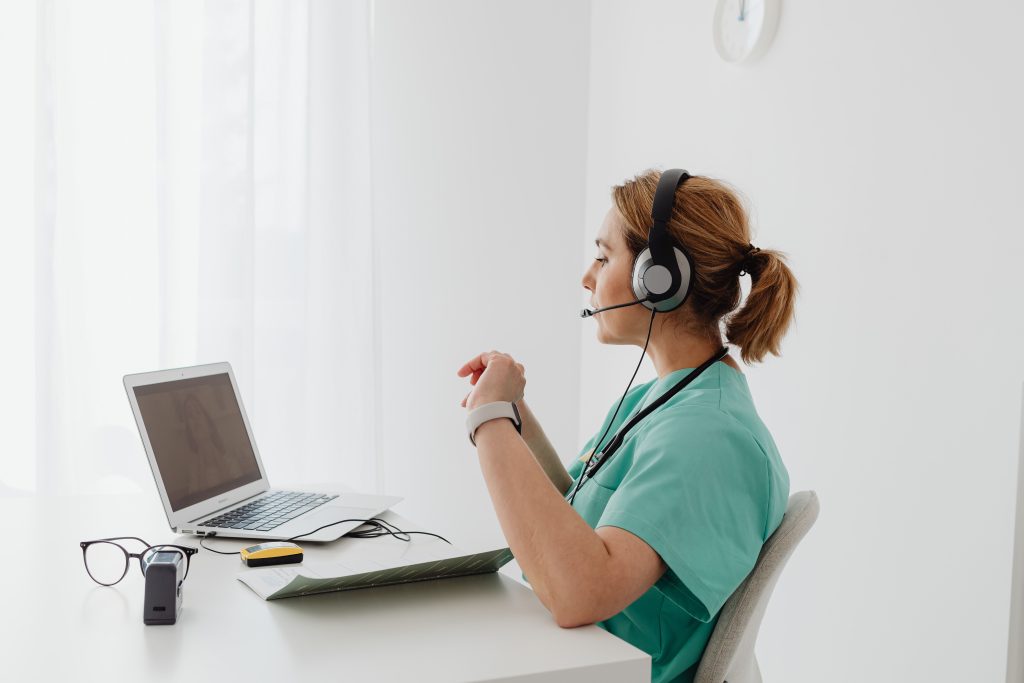
Deploying a dedicated virtual assistant for medical offices into daily operations has emerged as an essential strategy to manage massive patient portal inbox overload and protect clinic workflow efficiency in 2026. While patient portals offer convenient digital access for communication, they have also led to massive inbox overload for provider offices. Independent practices, specialty clinics, and adult care facilities are constantly sorting through hundreds of daily incoming messages, prescription refill updates, and urgent health concerns.
This digital data overload directly impacts clinical workflow efficiency. When an office relies entirely on local administrative secretaries to clear the inbox, clinical bottlenecks form. A general receptionist often lacks the formal training to accurately differentiate between a routine billing question and an urgent clinical escalation. To implement a safe, responsive communication strategy without increasing physician burnout, forward-thinking practices are integrating a specialized virtual assistant for medical offices into their team workflows.
The Operational Risk of Delayed Administrative Communication
In a standard clinical setup, the digital front door often becomes a source of administrative time-bleed. When patients submit unstructured text messages regarding new symptoms or side effects, those inquiries sit in a generalized data queue alongside basic receipt requests and scheduling questions.
This delayed response window creates a serious regulatory and patient safety vulnerability. If an anxious patient sends a message detailing subtle signs of an adverse drug reaction or cardiovascular stress, and that update remains unread for hours due to front desk distractions, the practice faces immediate liability threats.
Utilizing a specialized virtual assistant for medical offices removes this communication risk by establishing an organized, off-site triage pipeline. Your remote clinical assistant focuses entirely on evaluating messages, applying established office criteria, and routing documentation concurrently throughout the workday. This constant monitoring ensures that urgent clinical needs are flagged immediately, transforming a chaotic message backlog into a clean and predictable communication flow.
Why RN-Led Teams Optimize the Virtual Assistant for Medical Offices Profile
A common operational error among healthcare groups is hiring generalist remote workers or standard BPO clerks to filter medical communications. A general assistant lacks the specialized healthcare education needed to understand medical terminology, interpret vital statistics, or recognize clinical urgency. This deficiency leads to tracking mistakes and incomplete chart records that your local clinical team must eventually spend time fixing.
At Eternus Global, founded in 2009, we address this training deficit by building our services around a highly trained clinical professional profile. Your assigned virtual assistant for medical offices is often a Registered Nurse (RN) or a Certified Medical Scribe who possesses an inherent understanding of health systems.
This advanced clinical depth completely changes how your digital triage workflows operate:
- Protocol-Driven Message Evaluation: Our assistants utilize your specific office protocols to evaluate incoming patient messages, instantly separating routine administrative requests from real-time clinical risks.
- Efficient Virtual Rooming: For telehealth appointments, your remote professional contacts the patient fifteen minutes prior to the visit to troubleshoot technology, collect vital sign logs, and place them in the virtual waiting room.
- Concurrent Chart Documentation: Your remote professional ensures that all triage choices, patient updates, and communication trails are accurately recorded and filed within your Electronic Health Record (EHR) system.
By embedding an educated virtual assistant for medical offices into your practice, you eliminate the operational lag associated with unaligned generalist support, ensuring that your patient documentation remains perfectly accurate and audit-ready.
Protecting Practice Operating Margins and Stabilizing Revenue Cycles
Administrative friction does not just exhaust your medical staff; it directly drains your net revenue. If an overextended local team delays a prior authorization request or processes a clinical referral form incorrectly, the resulting insurance denial or documentation bottleneck can disrupt your practice’s cash flow. Furthermore, navigating payer portals to secure necessary approvals requires hours of meticulous paperwork that local teams often struggle to complete due to ongoing clinic floor distractions.
When you integrate a virtual assistant for medical offices through Eternus Global, your business gains access to an advanced, pharmacist-led denial defense unit. Our remote professionals possess the specialized clinical knowledge required to read insurance rejection letters accurately, pinpoint the exact documentation gaps that triggered the denial, and collect the laboratory values or imaging reports needed to satisfy medical necessity.
Our assistants take full ownership of the appeals process, drafting robust Level 1 and Level 2 medical appeals that cite specific clinical guidelines to successfully overturn insurer rejections. This specialized support protects your practice’s profit margins, increases your clean claim rates, and ensures your patients receive their necessary therapies without extended administrative delays. Transferring this burden to an expert virtual assistant for medical offices stabilizes your revenue cycle and minimizes financial losses associated with uncompensated administrative tracking.
Ironclad Compliance: The Zero-Possession Virtual Assistant for Medical Offices Architecture
Expanding your clinic’s data systems through remote channels requires strict attention to data privacy. Compliance officers must be completely certain that accessing data via remote networks will not expose the organization to data breaches, data leakage, or federal auditing liabilities under the Health Insurance Portability and Accountability Act (HIPAA).
Eternus Global guarantees data safety by applying a strict Zero-Possession Architecture across all our remote solutions, which underpins our virtual assistant for medical offices framework with enterprise-grade data protection. Your dedicated remote assistant does not operate on unmonitored personal devices, and our staff is completely restricted from caching patient records locally.
Our remote clinicians access your EHR environment—whether you use Epic, Cerner, athenahealth, or eClinicalWorks—solely through a hardened, encrypted Virtual Desktop Infrastructure (VDI). This secure setup functions as a glass window into your local servers, allowing our professionals to review charts and manage triage documentation without a single piece of protected health information (PHI) ever crossing our perimeter. System-level restrictions are hard-coded to disable all remote capabilities for downloading, copying, pasting, printing, or taking screenshots of patient records. Every single digital interaction is fully logged and recorded, meeting the highest SOC 2 Type II, GDPR, and HIPAA safety benchmarks. This model also aligns with strict state-level rules, such as Texas Senate Bill 1188, which explicitly bans the offshore storage of electronic records, allowing you to scale your team safely using a virtual assistant for medical offices.
Fractional Scaling and Global Follow-the-Sun Coverage
Traditional hiring methods can force independent medical practices into an inefficient fixed-labor situation, where you must take on the heavy overhead of a full-time employee even if your actual triage volume only requires part-time support. This structural rigidity can place a heavy strain on your clinic’s operational budget, especially when navigating shifting insurance reimbursement rates.
Utilizing a virtual assistant for medical offices introduces complete flexibility to your practice management through our fractional scaling model. Instead of taking on long-term employment liabilities, you can secure specialized support dedicated precisely to your peak friction points, allowing you to convert fixed administrative costs into an agile, variable resource that matches your actual revenue stream, routinely reducing clinic operating expenses by forty to seventy percent.
Furthermore, our global network operates across multiple hubs in the United States, United Kingdom, Spain, Bulgaria, and Australia, delivering around-the-clock efficiency. This follow-the-sun operational model means your administrative tasks do not stop when your physical building closes at five o’clock. While your local team rests, your remote pod can continue organizing data, managing incoming patient messages, and processing insurance appeals overnight. We serve patients in English, Spanish, Bulgarian, German, and French, allowing your practice to provide comprehensive multilingual support without the high cost of hiring local translators. When your physical doors open in the morning, your local staff is greeted by an empty inbox and a pre-charted daily schedule, ensuring a seamless start to the clinical day. This continuous operational model gives your independent practice a strong competitive edge in your regional market.
Future-Proofing Modern Medical Office Communication
The modern medical market requires an evolution in how we view and manage administrative workflows. Relying on an overextended in-house team or a non-compliant generalist assistant is no longer a practical strategy for a sustainable medical business. Our seamless three-step integration process makes implementation direct and simple. A clinical architect maps out your current communication paths, configures a pod that plugs safely into your current EHR platform, and deploys a pre-trained, secure clinical team within thirty days.
By offloading routine administrative friction to an expert remote hub, you protect your business margins, eliminate provider burnout, and deliver an exceptional, responsive patient experience. Transitioning your administrative tasks to an optimized clinical network allows your onsite medical staff to focus 100% of their energy on what they do best: providing excellent direct clinical care. Choosing a high-intelligence virtual assistant for medical offices is the most reliable operational decision a practice leader can make to ensure long-term stability and sustained financial health.
Stop fighting your inbox and start managing care. Contact Eternus Global today to schedule a free workflow audit, and discover how our AI-augmented, physician-led clinical pods can transform your practice in less than 30 days.